
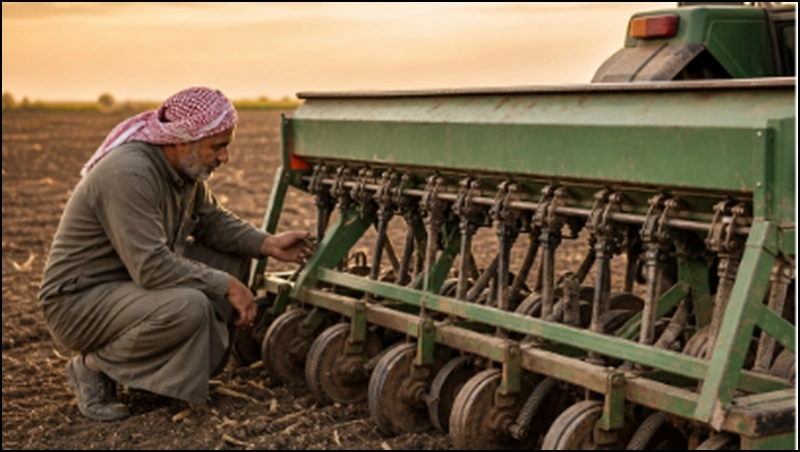
Across the agricultural landscape, a quiet but significant shift is taking place. Farmers who once prioritized brand-new equipment are increasingly reconsidering that approach — not out of financial desperation, but out of strategic intelligence. As input costs continue to climb and margins remain tight, the decision to invest in quality pre-owned planting equipment has become one of the smartest moves a producer can make heading into a new growing season.
The Real Cost of New vs. Used Planting Equipment
There is a persistent myth in farming circles that newer always means better. While modern seed drills certainly come with impressive technological upgrades, the depreciation curve on new agricultural machinery is steep and unforgiving. A brand-new seed drill can lose a significant portion of its value within the first two to three seasons of use, leaving the original buyer absorbing that financial hit entirely. A used machine, by contrast, has already passed through that depreciation valley. The buyer inherits a piece of equipment that has proven its durability in real field conditions — not just in a manufacturer’s testing environment.
Beyond depreciation, there is the matter of capital allocation. Every dollar spent on an overpriced new machine is a dollar not available for seed, fertilizer, fuel, or labor. For operations running on tight seasonal budgets, that flexibility can be the difference between a profitable year and a break-even one. Used equipment, when sourced responsibly, offers a compelling combination of proven performance and financial efficiency.
Understanding What to Look for in a Pre-Owned Seed Drill
Not all used seed drills are created equal, and experienced buyers know that due diligence is non-negotiable. The first thing to evaluate is the condition of the seed metering system. This is the heart of any drill, and wear in this area directly affects seeding accuracy and crop establishment. Uneven seed distribution at planting translates to yield inconsistencies at harvest — a problem that compounds across hundreds of acres.
Coulter and disc condition is another critical inspection point. These components bear the brunt of soil contact and are subject to significant wear, particularly in rocky or heavy clay soils. Replacement parts are available for most major brands, but knowing the current condition helps a buyer accurately estimate total acquisition cost. Frame integrity, hydraulic function, and the condition of press wheels and depth adjustment mechanisms round out the essential checklist. A machine that passes all these checkpoints is not a compromise — it is a calculated investment.
Farmer Optimism Is Driving Equipment Investment
The timing of this trend toward used equipment purchasing aligns with a broader wave of agricultural confidence. According to recent reporting on farmer sentiment and investment intentions, producers across multiple sectors are showing clear signs of increased optimism and a willingness to invest in their operations heading into the coming year. This is not reckless spending — it is calculated expansion, and used equipment sits at the center of that strategy for many operations.
When farmers feel confident about commodity prices and yield potential, they look for ways to scale their capacity without overextending their balance sheets. Purchasing a reliable used seed drill allows an operation to increase planted acreage or improve seeding precision without the financial exposure that comes with a major new equipment purchase. It is a pragmatic form of growth that experienced producers have relied on for generations.
The Role of Versatile Machinery in Modern Farm Operations
Seed drills do not operate in isolation. They are part of a broader ecosystem of farm machinery that must work together efficiently across varied terrain and conditions. Tractor compatibility, drawbar capacity, and PTO requirements all factor into whether a particular drill will integrate smoothly into an existing fleet. Farmers operating in challenging environments — steep gradients, wet paddocks, or heavily compacted soils — often need to think carefully about the towing and power requirements of their planting equipment. For those interested in the intersection of heavy-duty towing capability and agricultural versatility, this in-depth discussion on Unimog capabilities offers fascinating insight into what purpose-built machinery can achieve across demanding conditions.
The point is that smart equipment purchasing is never about a single machine in isolation. It is about how each piece contributes to the overall efficiency and resilience of the operation. A well-chosen used seed drill that pairs correctly with existing tractors and fits the specific soil and crop requirements of a farm is worth far more than a mismatched new model purchased simply for its novelty.
Where to Source Quality Used Seed Drills
Finding a trustworthy source for pre-owned planting equipment is arguably as important as knowing what to look for in the equipment itself. The used machinery market has historically been fragmented and opaque, with buyers relying heavily on word-of-mouth, local auctions, and classified listings of varying reliability. That landscape has changed considerably in recent years, with dedicated agricultural equipment platforms offering curated inventory, transparent pricing, and detailed machine specifications.
For producers actively searching for planting solutions, browsing a reputable dealer’s inventory is the most efficient starting point. HR Agripower offers a comprehensive selection of pre-owned planting and seeding equipment across multiple makes and models. Farmers looking for a used seed drill for sale will find a well-organized inventory that allows for comparison across brands, configurations, and price points — making it easier to match the right machine to the specific demands of any operation.
About HR Agripower’s Used Equipment Offering
HR Agripower has built a strong reputation in the agricultural equipment sector by maintaining a diverse and regularly updated inventory of used machinery. Their planting and seeding category reflects a genuine understanding of what farmers need at different scales of operation — from smaller single-disc drills suited to mixed farming enterprises to larger precision air seeders designed for broadacre cropping. The platform’s filtering capabilities allow buyers to narrow their search by industry, make, and model, reducing the time spent sifting through irrelevant listings. For time-pressed farmers, that efficiency has real value.
Making the Purchase Decision with Confidence
Ultimately, the decision to purchase a used seed drill should be approached with the same rigor applied to any significant business investment. That means conducting thorough inspections, understanding the maintenance history of the machine, and calculating the total cost of ownership — not just the sticker price. It also means buying from sources that stand behind their inventory and can provide accurate, honest information about each machine’s condition and history.
The farmers who consistently outperform their peers are rarely those who spend the most on equipment. They are the ones who spend wisely — matching the right tools to the right tasks and extracting maximum value from every dollar invested. In the current agricultural environment, a well-sourced used seed drill is not a fallback option. It is a first-choice strategy for producers who understand that efficiency, not extravagance, is the foundation of long-term farm profitability.
Conclusion
The used equipment market has matured significantly, and the stigma once attached to pre-owned machinery has largely dissolved among experienced producers. With careful selection, proper inspection, and sourcing from reputable dealers, a used seed drill can deliver years of reliable service at a fraction of the cost of its new counterpart. As farmer confidence grows and investment intentions strengthen heading into the next season, those who position themselves with the right equipment — at the right price — will be best placed to capitalize on the opportunities ahead.