
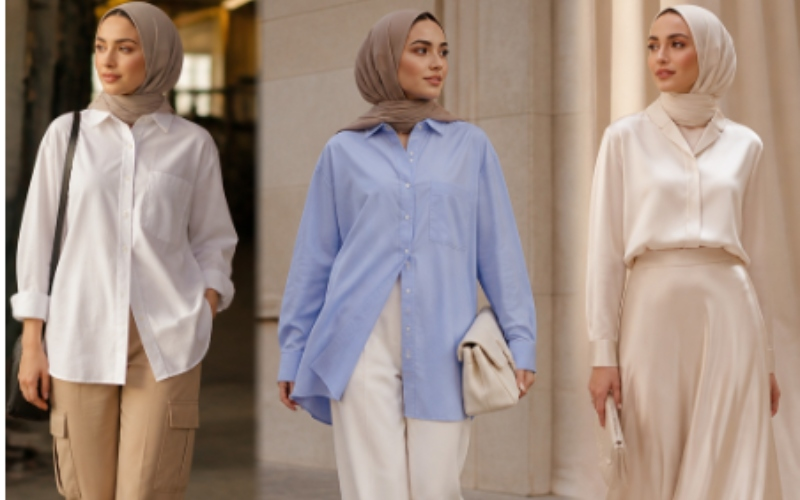
Few garments have demonstrated the kind of cultural endurance that the shirt has. From its origins as functional workwear to its current status as a canvas for high fashion, the shirt has quietly evolved into one of the most democratically worn and creatively interpreted pieces in the global wardrobe. Whether it’s a crisp button-down in a boardroom or a relaxed cotton tee on a Paris runway, the shirt continues to reinvent itself season after season — and the industry is paying close attention.
The Shirt’s Long Journey Through Fashion History
The shirt’s story begins not in fashion houses but in fields and factories. For centuries, it was considered an undergarment — a layer worn beneath jackets and waistcoats, rarely seen in polite society. It wasn’t until the early twentieth century that the shirt began its ascent into everyday outerwear. Post-war practicality, the rise of casual dressing, and the influence of American workwear culture all played pivotal roles in repositioning the shirt as a standalone garment worthy of attention.
By the 1950s and 60s, the shirt had become a symbol of youth rebellion and cultural identity. Rock musicians wore them unbuttoned and untucked. Cowboys made the western shirt iconic. Office workers adopted the white dress shirt as a uniform of professionalism. Each subculture claimed the shirt as its own, and in doing so, expanded its cultural vocabulary far beyond its utilitarian roots.
Workwear Shirts: Durability Meets Design
In the realm of practical dressing, few shirt styles have proven as enduring as the workwear shirt. Designed for durability, comfort, and function, these garments have long been the backbone of industries ranging from agriculture to construction. But in recent years, workwear shirts have crossed over into mainstream fashion, embraced by consumers who value both aesthetic appeal and genuine utility.
The single-pocket shirt, in particular, has become a hallmark of this crossover. Functional yet refined, it bridges the gap between rugged outdoor wear and polished everyday dressing . A great example of this style done right is the RB Sellars Wagga single pocket shirt, which captures the essence of Australian workwear — practical construction, quality fabric, and a clean silhouette that transitions effortlessly from the paddock to the pub. It’s the kind of shirt that doesn’t try too hard, and that’s precisely its appeal.
Why Functional Shirts Are Having a Fashion Moment
The renewed interest in workwear-inspired shirts isn’t accidental. It reflects a broader cultural shift toward authenticity and purposeful dressing. Consumers are increasingly skeptical of fast fashion’s disposability and are gravitating toward pieces that offer longevity, craftsmanship, and real-world wearability. A well-made work shirt, constructed from durable cotton or a performance blend, speaks directly to those values. It’s a garment that earns its place in the wardrobe not through trend cycles but through consistent performance.
The T-Shirt’s Elevation: From Basic to Statement
While the button-down shirt has its own storied history, the humble T-shirt has undergone perhaps the most dramatic transformation in fashion’s recent memory . Once considered the most basic of basics, the T-shirt is now a legitimate vehicle for artistic expression, brand identity, and cultural commentary. Luxury houses have invested heavily in redefining what a T-shirt can be — and the results have been nothing short of remarkable.
This elevation reached a new peak when Anne Hathaway stepped out in a Balenciaga T-shirt ahead of the brand’s Spring 2026 Paris show, sparking widespread conversation about the intersection of celebrity culture and high fashion. As detailed in this in-depth report on Anne Hathaway’s Balenciaga moment, the appearance underscored how a single garment — worn by the right person at the right moment — can crystallize an entire fashion narrative. The T-shirt, in this context, was no longer just clothing. It was a statement.
What Luxury T-Shirts Tell Us About Modern Fashion Values
The luxury T-shirt phenomenon reveals something important about where fashion is headed. Consumers are no longer content with complexity for its own sake. There’s a growing appreciation for restraint — for garments that communicate quality through fabric weight, precise cut, and thoughtful construction rather than excessive ornamentation. A perfectly made T-shirt, in this light, becomes a study in confidence. It says everything without saying too much.
Custom Shirts and the Rise of Brand Identity Apparel
Beyond personal fashion, shirts have become one of the most powerful tools in brand communication. Businesses, sports teams, events, and organizations of all sizes have recognized that a well-designed, high-quality shirt is one of the most effective forms of wearable marketing. The demand for custom-printed and embroidered shirts has grown substantially, driven by a desire for professional presentation and cohesive brand identity.
This is where purpose-built manufacturing plays a critical role. Fast Shirt Factory has established itself as a go-to solution for businesses and individuals seeking high-quality custom shirts produced efficiently and at scale. With a focus on fast turnaround times without compromising on print quality or fabric standards, the brand addresses a genuine gap in the market — one where speed and quality are too often treated as mutually exclusive. Whether for corporate uniforms, promotional merchandise, or event apparel, the ability to receive professionally finished shirts quickly is a competitive advantage that modern businesses can’t afford to overlook.
The Business Case for Quality Custom Apparel
Investing in quality custom shirts isn’t just an aesthetic decision — it’s a strategic one. Studies consistently show that branded apparel increases brand recall and creates a sense of team cohesion among employees . When staff wear well-made, professionally designed shirts, it signals to customers that the business takes pride in its presentation. Conversely, poorly made or ill-fitting branded shirts can undermine credibility. The quality of the garment becomes, by extension, a proxy for the quality of the business itself.
Fabric, Fit, and the Future of Shirt Design
As the shirt continues to evolve, fabric innovation and fit precision are emerging as the primary battlegrounds for differentiation. Performance fabrics that wick moisture, resist wrinkles, and maintain shape through repeated washing are increasingly standard expectations rather than premium features. Meanwhile, the conversation around inclusive sizing and fit diversity is reshaping how manufacturers approach pattern-making and production.
Sustainability is also becoming a non-negotiable consideration. Consumers are asking harder questions about where their shirts come from, how they’re made, and what happens to them at the end of their life. Brands that can answer these questions transparently — and back their answers with genuine practice — are earning lasting loyalty in a market that’s increasingly skeptical of greenwashing.
Conclusion: The Shirt as a Reflection of Who We Are
The shirt, in all its forms, remains one of fashion’s most honest garments. It doesn’t hide behind complexity or rely on novelty to make its case. Whether it’s a rugged single-pocket work shirt built for the Australian outdoors, a luxury tee worn on the streets of Paris, or a custom-printed corporate shirt representing a growing brand, each version tells a story about the person wearing it and the values they hold. In a fashion landscape that often prizes spectacle over substance, the shirt endures because it gets the fundamentals right — and that, ultimately, is what great design always comes back to.