
The Australian higher education landscape is currently navigating its most significant transformation since the Dawkins reforms of the late 1980s. For students entering university in 2026, the goalposts have shifted. It is no longer just about “getting the degree”; it is about proving human-led competency in an era dominated by automated intelligence and globalized competition.
The Catalyst for Change: Why Now?
Several factors have converged to force a tightening of academic rigour. Firstly, the Tertiary Education Quality and Standards Agency (TEQSA) has shifted its focus toward “Learning Assurance.” In 2024 and 2025, universities were tasked with redesigning how they prove a student actually knows what they claim to know.
Secondly, the “National Planning Level” (NPL) caps introduced in 2026 have limited international student commencements to 295,000. This “quality over quantity” approach means institutions are under more pressure to maintain high rankings by producing high-calibre graduates, leading to more stringent grading rubrics.
1. The Death of the “Standard Essay”
For decades, the 2,000-word essay was the gold standard of assessment. However, with 80% of Australian students now utilizing generative AI tools as part of their study routine, the “take-home essay” is being phased out or radically redesigned.
Universities are moving toward Authentic Assessment. This involves:
- Vivas and Oral Defences: Students must verbally explain their logic to tutors.
- In-Class “Blue Book” Exams: A return to supervised, handwritten reflections.
- Portfolio-Based Learning: Tracking a project from conception to completion over 12 weeks rather than a single final submission.
For many, this increased pressure is overwhelming. Navigating these new formats requires a higher level of preparation. Students often find that seeking reputable australia assignment help is no longer just about getting words on a page, but about understanding these complex new rubrics and academic integrity expectations.
2. The Integrated “Work-Ready” Metric
In 2026, the Australian government’s Better and Fairer Schools Agreement and the VET-to-Higher Ed pathways have blurred the lines between academic theory and vocational skill. Degrees are now being measured by “Employability Outcomes.”
Grading is shifting from “Did you cite 10 sources?” to “Can you apply this theory to a real-world Australian industry problem?” This shift toward “Applied Knowledge” means that assignments are becoming more complex, often requiring data analysis or software proficiency that wasn’t required five years ago.
3. Academic Integrity in the Age of “Wicked Problems”
Integrity is the biggest “red flag” for Australian universities today. With the rise of advanced AI, “Contract Cheating” laws (enforced by the ESOS Act) have become incredibly strict. Detection tools have evolved beyond simple plagiarism checks; they now look for “stylometric consistency”—whether the writing style of an assignment matches the student’s previous work.
4. Financial and Mental Health Pressures
We cannot discuss shifting standards without mentioning the cost of living. In 2026, the average international student tuition fee has risen by approximately 6.5%. With student visa work limits capped at 48 hours per fortnight, the “time-poverty” of the modern student is at an all-time high.
When academic standards rise while free time decreases, the risk of burnout increases. Strategic time management—which includes knowing when to outsource the “structural” part of a study plan—is becoming a core survival skill for the 2026 cohort.
Comparison: 2022 vs. 2026 Academic Expectations
| Feature | 2022 Standards | 2026 Standards |
| Primary Assessment | Take-home essays & quizzes | Authentic assessments & oral vivas |
| AI Policy | Often banned or ignored | Integrated & highly regulated |
| Grading Focus | Knowledge retention | Applied employability skills |
| Integrity Checks | Basic Turnitin checks | Stylometric & AI-pattern analysis |
How to Stay Ahead of the Curve
To succeed in this new environment, students must adopt a three-pronged strategy:
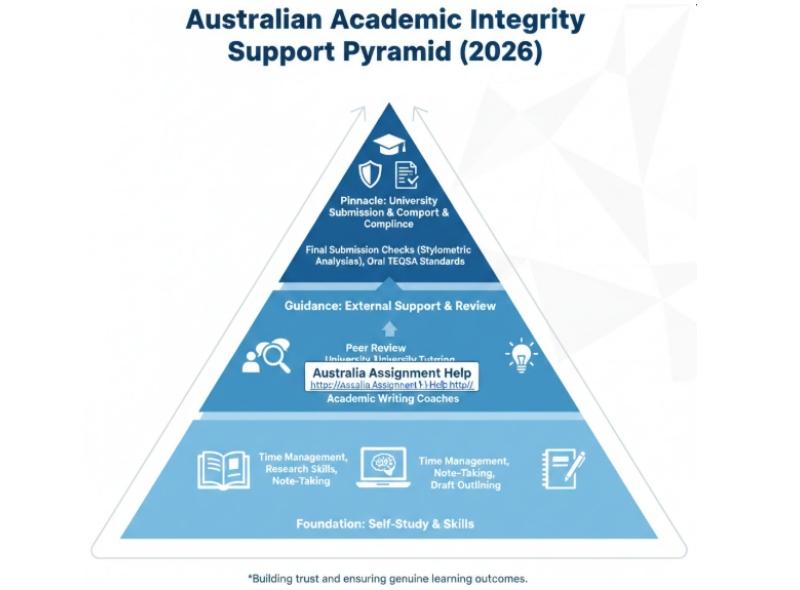
- Engage with the Process, Not Just the Result: Keep “draft versions” of every assignment. If a university challenges your integrity, your version history is your best defence.
- Master Digital Literacy: Don’t just use AI to write; use it to critique your own logic or summarize complex readings.
- Use Support Systems Early: Don’t wait until the week of the deadline. Whether it is university-provided tutoring or a specialized australia assignment help service, get feedback on your outline before you write the final piece.
Conclusion
The shift in Australian academic standards is a response to a changing world. While it feels harder to achieve a High Distinction (HD) today than it did four years ago, the value of an Australian degree has actually increased because of these higher hurdles. By understanding the shift toward authenticity and employability, students can navigate their university journey with confidence.
Author Bio
“I’m Henry Lee, an education consultant and academic strategist with over a decade of experience helping students navigate the complexities of higher education. My work focuses on bridging the gap between rigorous academic standards and student success, particularly within the Australian university sector. As a lead researcher at Myassignmenthelp.services, I specialize in developing resources that empower students to master complex rubrics and improve their technical writing skills.
For more information or suggestions, please contact us.